Plassey: Walking the Field Where India's Fate Was Fixed
A January morning at the battlefield of Plassey—mustard fields, mango trees, and the place where a rigged battle opened all India to the British.

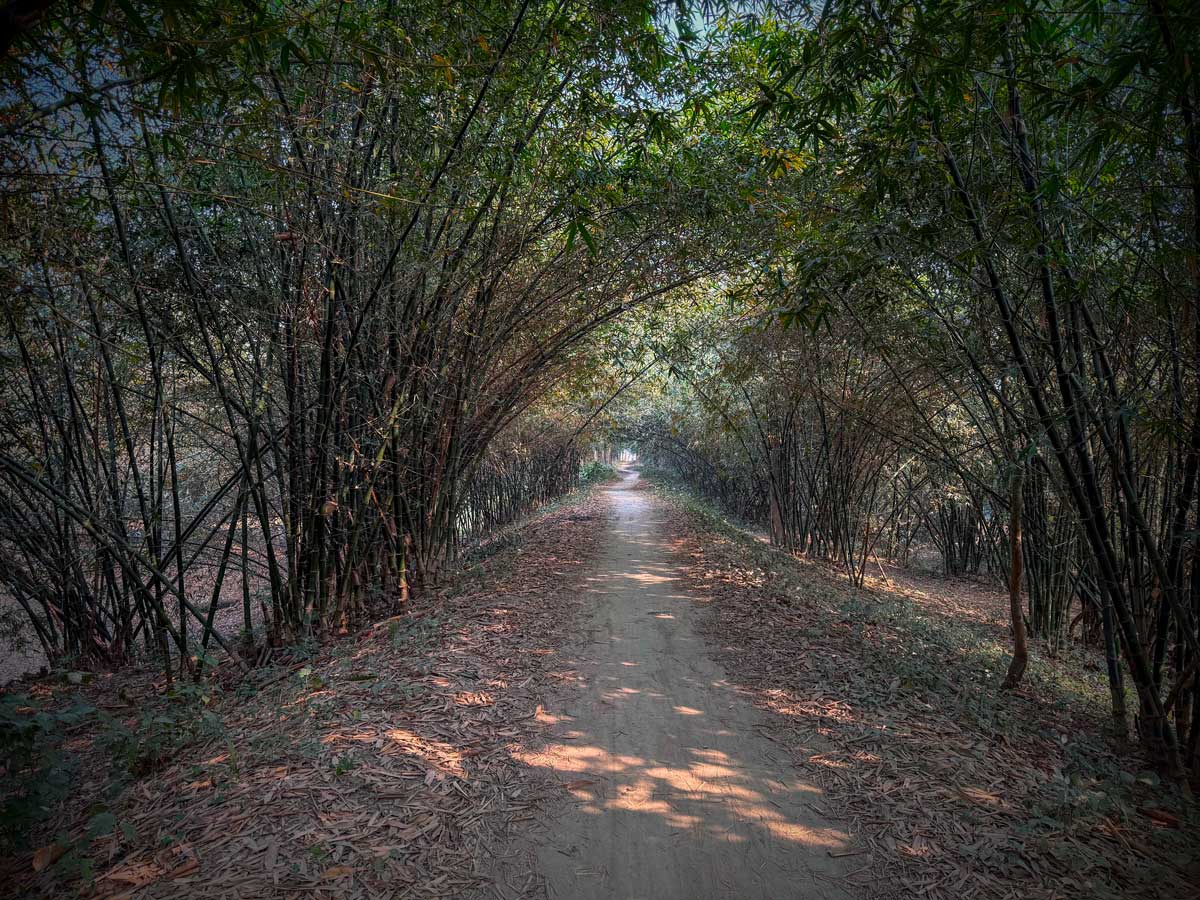
The Field of Battle
Arriving at the modest monument to the Battle of Plassey, I was drawn by the place to walk about in its bucolic beauty.
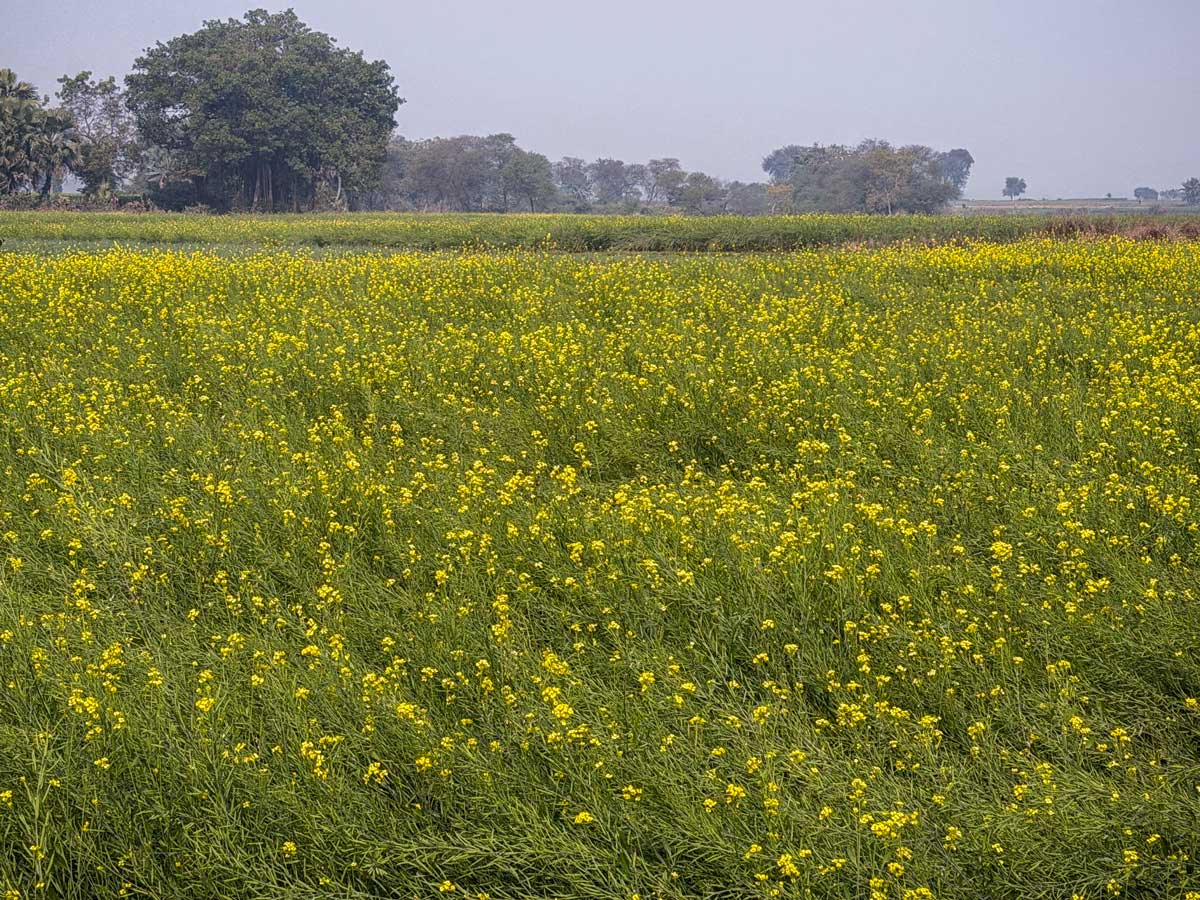
There were mango trees, tall and wide-canopied and very old. And there were cries of the Green Bee-eater, the Black-naped Monarch, the Blue-throated Barbet, the Eurasian Collared-Dove, the Black-hooded Oriole, the White Wagtail, and the Greenish Warbler. I walked on a bund, by a tank with trees around it, and fields on one side all the way out to the bending sky. The soil wasn't red or black like in the south where I live; here it was the colour of ash, but extremely fertile, and made more fecund by superb irrigation. Now in January, the fields were awash with the blazing yellow of mustard blossoms. There was no haze and no cloud that could dull their colour.
Trees leaned over a biggish pond. The Bhagirathi flowed a little ahead, but I had appetite only for the trees and the fields this morning. It was over the Bhagirathi that Clive arrived for battle; his men came overland with their weapons and all.
On my left were modest dwellings, a few huts and some small brick houses. It was quiet, and still, despite the quotidian doings of nature. I took pictures of dung cakes on the walls, and long jute sticks patted all round with dung, surprising a villager who cycled past.
In the fields massive power transmission lines were headed somewhere, but the eyes took little note of them in that quiet place where, apart from the birds, the only other sound was of a lowing cow in the distance.
Two hundred and sixty-eight years ago, in the rainy June of 1757, this tranquil ground was a battlefield — though barely. Here's where the Battle of Plassey was fought, and it was only half a battle. The match had been fixed beforehand, by Robert Clive and the Nawab's general Mir Jafar, and the powerful banking family of the Jagath Seths, in the house of the latter. A portion of the Nawab's army fought, while a larger portion that was under Mir Jafar's command stood passive, and walked away after a time. The Nawab fled, was eventually captured, and duly hacked.
Only his wife grieved for him, and stood by him, tending his grave her whole long life. The nawab, Sirajuddaula, who was only 24 when he fought in Plassey, was said to be a terrible human, even by the standards of his time, and he was full of passion. But he hadn't the guiles of Clive, nor European discipline instilled in his troops. He was easily done in. With his defeat, the subcontinent's fate tilted — not all at once, not in a single charge, but irreversibly. A pathway to all of India was cleared, and the British walked it for the next two centuries.
The huts, the houses, the old trees and the yellow fields of mustard appeared free of thought or memory of these happenings. The birds sang their different tunes. I stopped before a dead cat, crushed flat on this narrow bund on which I was walking, on a section where a motorcar could not pass. It lay there unremarked, indifferent to the weight of everything that had happened here.
The Monument
When I'd arrived at the monument I was the lone visitor, but when I returned after an hour out on the bund and in the fields, a family was taking pictures of the column and the plaque. Two kids who were playing nearby ran up to me, crying, "iPhone 17! iPhone 17 Pro!"
"How do you know?" I asked them.
"We can tell," they said, shy and also bold.
"Take our picture," they said.
"The shots will be on my phone; what good is it for you?" I said.
It was not a good thing to say. Their faces fell.
An elderly man came over from the car. "Come here," he said in Bengali to the kids, standing next to the column. "Do you know what happened here?"
They didn't. The man didn't tell them. He walked back to his car.
"Children must know our history," he said in English to the still, quiet place around us. There was no particular bitterness in it — only the flat register of a conviction long held and not acted upon.
He seemed a man of some distinction, tall and a little bent, with slicked silver hair. His body had aged to a fine elegance. The children and I watched him get in his hired car and go. Then we glanced at each other, they who knew nothing, and I who knew too little.
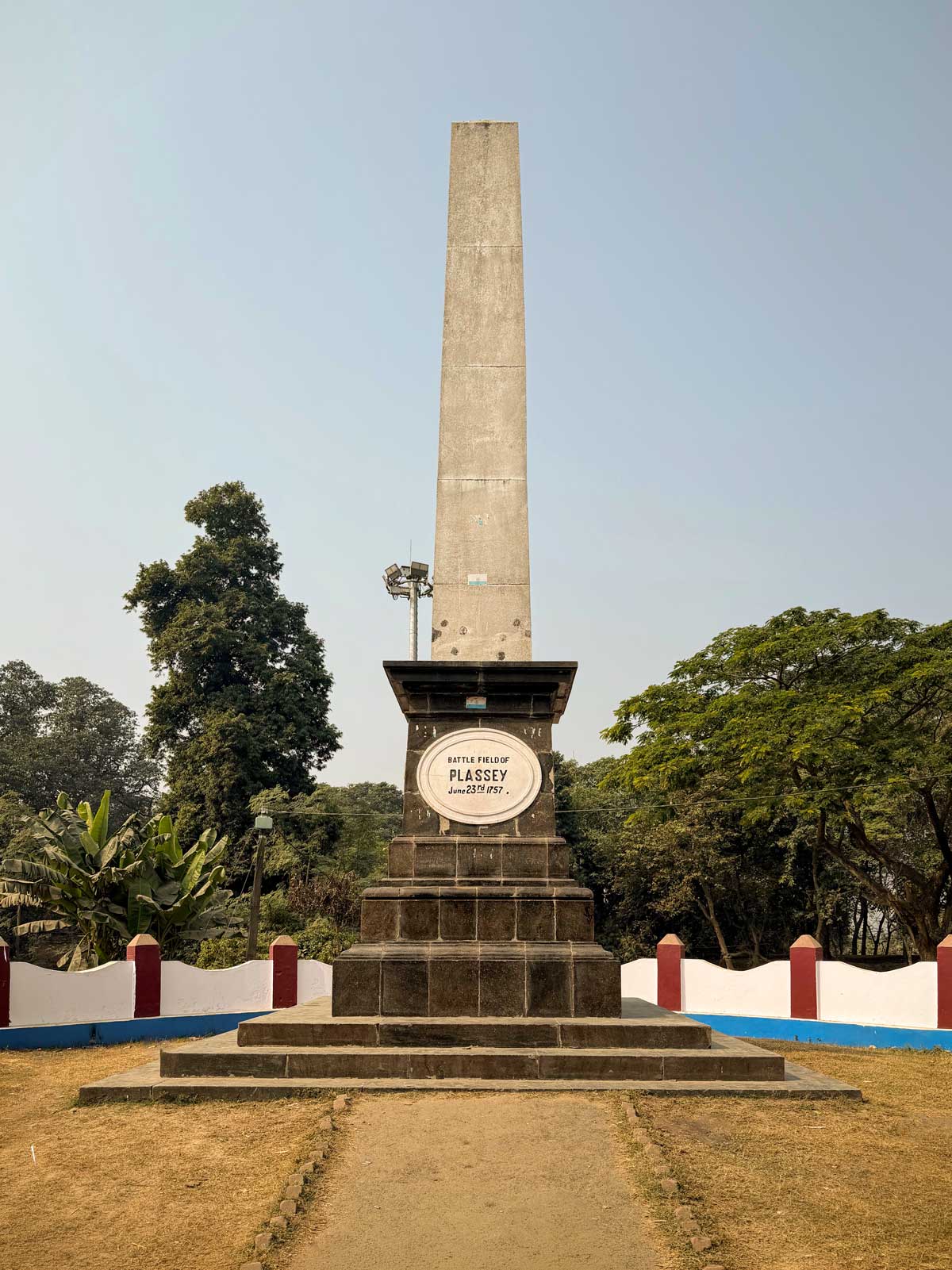
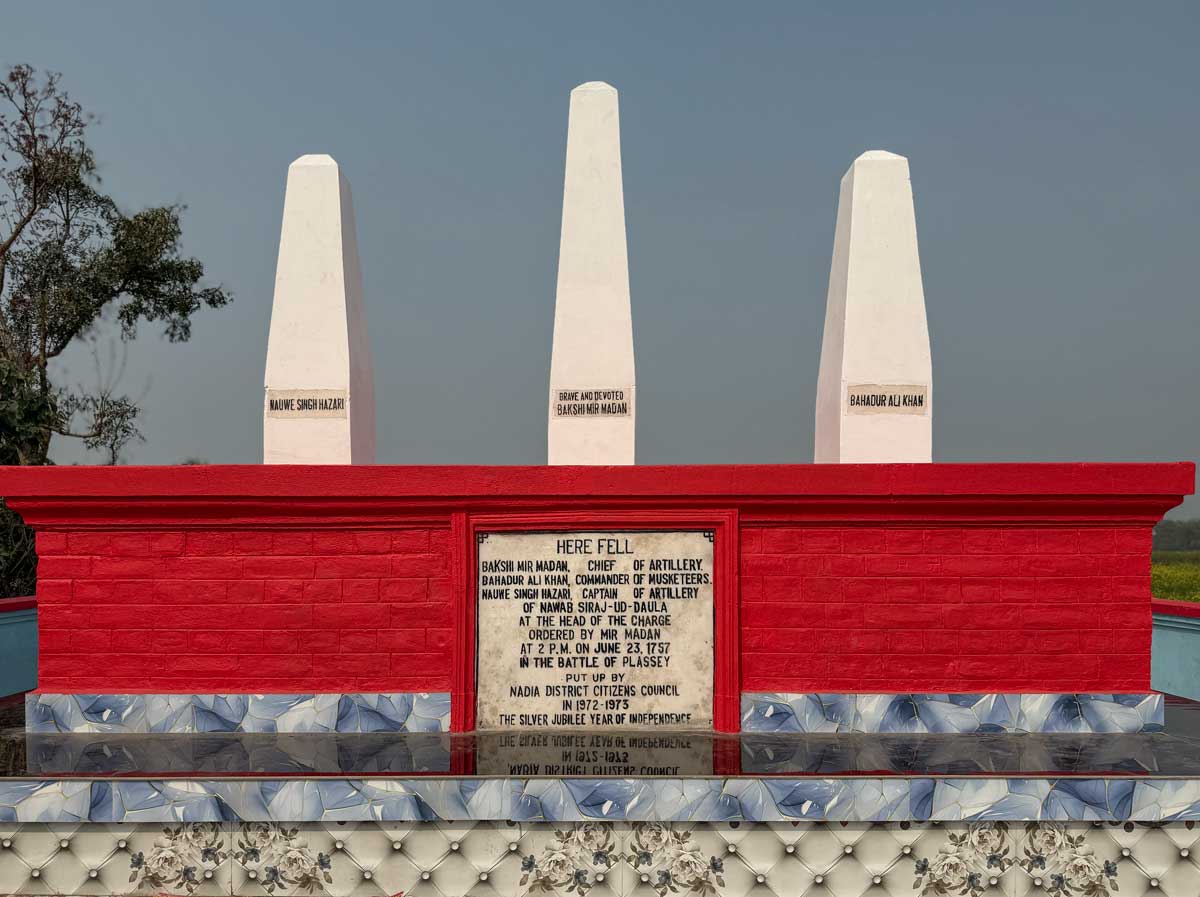
Battle of Plassey Memorial